

Custom Decorative Film Manufacturer
Xiongxing Group is a joint-stock private enterprise specializing in manufacturing new materials. Long pursuit of the management spirit of "customer-oriented", the corporate philosophy of "Truth, Creation, Quality and Efficiency" as well as the firm spirit and courage to be the pioneer.
Why Choose Us
High-Speed Production
Our production line contains a variety of professional machines. The machines and factories produce 24 hours a day. Our production lines can cooperate to form an entire production chain.
Rich Experience
We are an experienced PVC film manufacturer, specializing in production films for more than 26 years. So far Xiongxing is divided into 3 independent corporate enterprises.
Quality Guaranteed
We have very strict QC systems to check the material quality before production and after production. We visited our main market twice per year and got feedback for improving our technology.
Wide Product Range
Our products include PVC plastic films (Embossed film, Mattress film, Clear Film, Rigid film, etc), PVC PET interior decoration film (wood grain film, cement grain, etc), plastic plasticizers, etc.
-
![DIISONONYL PHTHALATE]() Add to Inquiry
Add to Inquiry -
![Plasticizer DINP Diisononyl Phthalate for PVC cable]()
Plasticizer DINP Diisononyl Phthalate for PVC cable
Add to Inquiry -
![DINP Cable Plasticizer]() Add to Inquiry
Add to Inquiry -
![DINP Wire Plasticizer]() Add to Inquiry
Add to Inquiry -
![DINP Leather Plasticizer]() Add to Inquiry
Add to Inquiry -
![DINP Synthetic Rubber Plasticizer]()
DINP Synthetic Rubber Plasticizer
Add to Inquiry
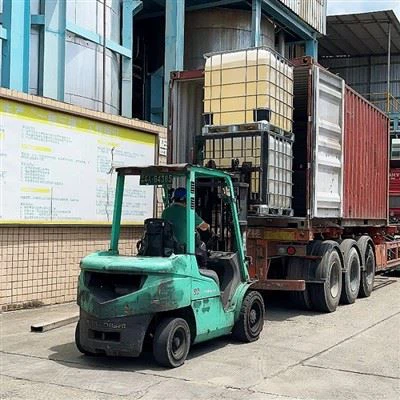


Definition of DINP
DINP belongs to a family of chemicals called phthalates, which are added to some plastics to make them flexible. DINP is one of the phthalates most frequently used in plastic products. It has good compatibility with PVC and will not precipitate even if it is used in large quantities. Because the products produced by this product have good water resistance, extraction resistance, low toxicity, aging resistance, and excellent electrical insulation properties, they are widely used in toy films, wires, and cables.
Specification
| Characteristics | Unit | Test | Method Value |
| Colour | Mg Pt/L | ASTM-D-1045-86 | ≤25 |
| Viscosity(20℃) | mPa.s | ASTM-D-445-86 | 72-82 |
| Specific Gravity(20℃) | g/ml | ASTM-D-1045-86 | 0.973 |
| Refractive Index(27℃) | - - | ASTM-D-1045-86 | 1.484-1.488 |
| Acidity | wt.% | ASTM-D-1045-86 | ≤0.01 |
| Ester Content | wt.% | Degussa | ≧99.6 |
| Moisture | wt.% | ASTM-E-203 | ≤0.04 |
Features of DINP
Chemical Structure
DINP is not a single chemical, but a mixture of different isononyl esters of phthalic acid. The isononyl group is a branched alkyl chain with nine carbon atoms. The exact composition of DINP may vary depending on the manufacturer and the application.
Chemical Properties
DINP has the following chemical formula: C26H42O4. It has a molecular weight of 418.61 g/mol. It is a colorless, oily liquid with a slight odor. It has a density of 0.972 g/mL at 25 ℃, a melting point of -48 ℃, a boiling point of 252 °C at 0.7 kPa, and a flash point of 235 ℃. It is poorly soluble in water (<0.01 g/mL at 20 ℃), but soluble in organic solvents such as chloroform and methanol. It has a viscosity of 64 to 265 mPa·s and a refractive index of 1.485 at 20 ℃.
Desirable for Plastics
DINP can impart various desirable properties to plastics, such as:
● Flexibility: DINP can make plastics more pliable and elastic, which can improve their performance and durability.
● Transparency: DINP can increase the clarity and gloss of plastics, which can enhance their appearance and quality.
● Stability: DINP can improve the thermal stability and resistance to oxidation of plastics, which can extend their shelf life and prevent discoloration.
● Compatibility: DINP can blend well with other plasticizers and additives, which can optimize the formulation and processing of plastics.
Applications of DINP
Automotive
DINP's durability and ease of manufacturing lend it to use in the automotive industry. When added to chassis coverings, it helps prevent damage due to dirt, corrosion, and rust damage or corrosion.
Building and Construction
DINP materials are often employed in the building and construction industry to cover exteriors and roofing. They can also be used in water-resistant protective coverings such as those used in arenas.
Cable and Wire
DINP's durability, flexibility, thermal resistance, and cost-effectiveness make it excellent for use as an insulator in smaller products, such as cables and wires.
Flooring and Textiles
As DINP evaporates slowly, it can be a good option for flooring and textile manufacturing applications, which often require lengthy dipping or spraying techniques.
Adhesives
Various caulks and sealants can benefit from DINP's low migration and weather resistant properties.
Clothing
When added to synthetic materials—such as faux leather—DINP grants additional flexibility and wear resistance.

The preparation method comprises the following steps:
Performing reaction between isononyl alcohol and phthalic anhydride under the action of a non-acidic catalyst obtain diisononyl phthalate;
Performing reaction between liquid paraffin and chlorine under the action of a compound catalyst to obtain chlorinated paraffin;
Mixing the diisononyl phthalate, the diisononyl phthalate and the grease dimer acid at a certain temperature to obtain the compound plasticizer.
It is simple and reasonable in composition, the preparation method is simple and stable in operation and is easy to realize industrial production. And the prepared compound plasticizer is good in plasticizing effect, low in plasticizing temperature, stable in product size and high in top-grade product rate.
Storage Tips for DINP
Container Selection
Choose containers made of compatible materials to prevent interaction with the plasticizer. Opt for containers that provide a tight seal to minimize exposure to air and moisture.
Segregation from Incompatible Substances
Store DINP away from incompatible chemicals to prevent reactions.
Clearly label storage areas to indicate the presence of DINP and any restrictions.
Regular Inspections
Conduct routine inspections for leaks, damage, or signs of contamination. Immediately address any issues to prevent further deterioration.
Emergency Response Plan
Develop and communicate an emergency response plan in case of spills or accidents. Ensure availability of appropriate cleanup materials and personal protective equipment.
Temperature Control
Store DINP at recommended temperatures to prevent degradation. Avoid extreme temperature fluctuations that may affect the plasticizer's performance.
Avoid Sunlight Exposure
Keep containers away from direct sunlight to prevent UV-induced degradation. Store in a shaded area or use UV-blocking containers when exposure is unavoidable.
Ventilation
Ensure adequate ventilation in storage areas to prevent the accumulation of vapors. Store in well-ventilated spaces to minimize the risk of concentration.
Handling Precautions
Follow proper handling procedures to avoid spills or accidents during storage. Provide training to personnel on safe handling practices.
Certifications
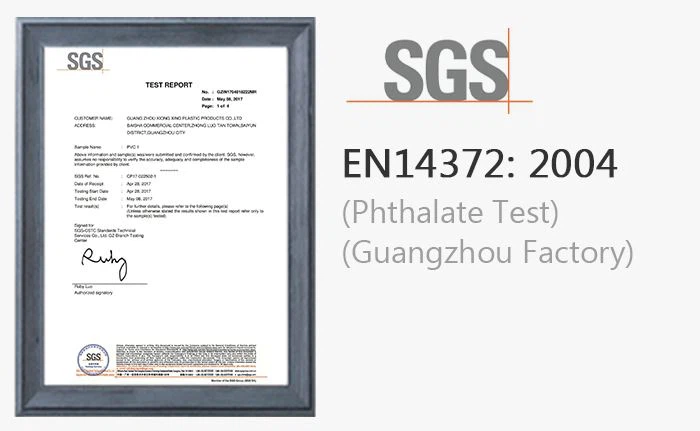
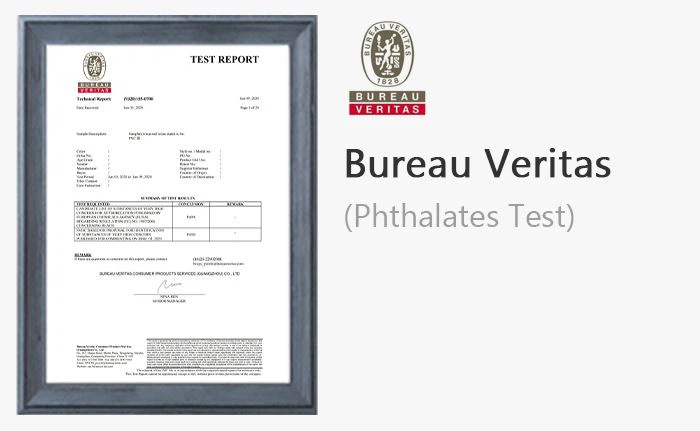
We have passed ISO9001, ISO14001, EN7 16, EN14342, SGS, etc.


Our Factory
Our factory covers an area of up to 400,000 m2 and has 37+ production lines to support large-scale production.


Frequently Asked Questions (FAQ) about DINP
Q: What polymers is DINP commonly used with?
Q: How does DINP function as a plasticizer?
Q: Is DINP suitable for food contact applications?
Q: Is DINP toxic?
Q: Are there regulations governing the use of DINP?
Q: Can DINP be replaced with alternative plasticizers?
Q: How stable is DINP under different temperature conditions?
Q: Can DINP be recycled?
Q: What safety precautions should be taken when handling DINP?
Q: What is the shelf life of products containing DINP?
Q: Are there labeling requirements for products containing DINP?
Q: How does DINP affect the mechanical properties of polymers?
Q: Can DINP be used in toys?
Q: Does DINP have an odor?
Q: What are the alternatives to DINP in specific applications?
Q: Can DINP be used in adhesives?
Q: How is DINP synthesized?
Guangdong Xiongxing New Material Co., Ltd. is one of the leading dinp manufacturers and suppliers in China. We warmly welcome you to wholesale high-grade dinp in stock here from our factory. All custom made products are with high quality and competitive price. Contact us for free sample.
Diisononyl Phthalate Plasticizer, DINP Leather Plasticizer, Plasticizer Oil DINP